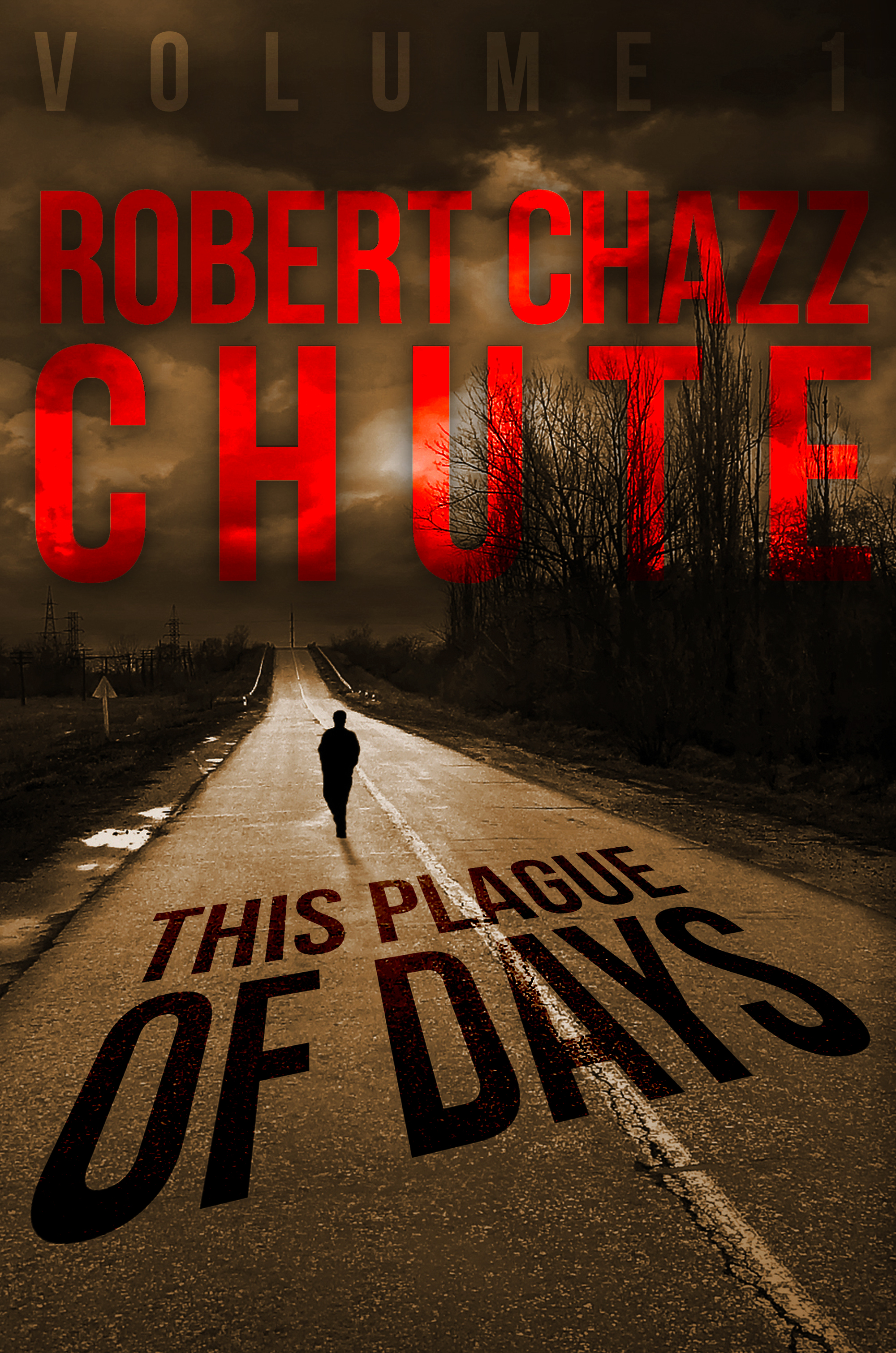
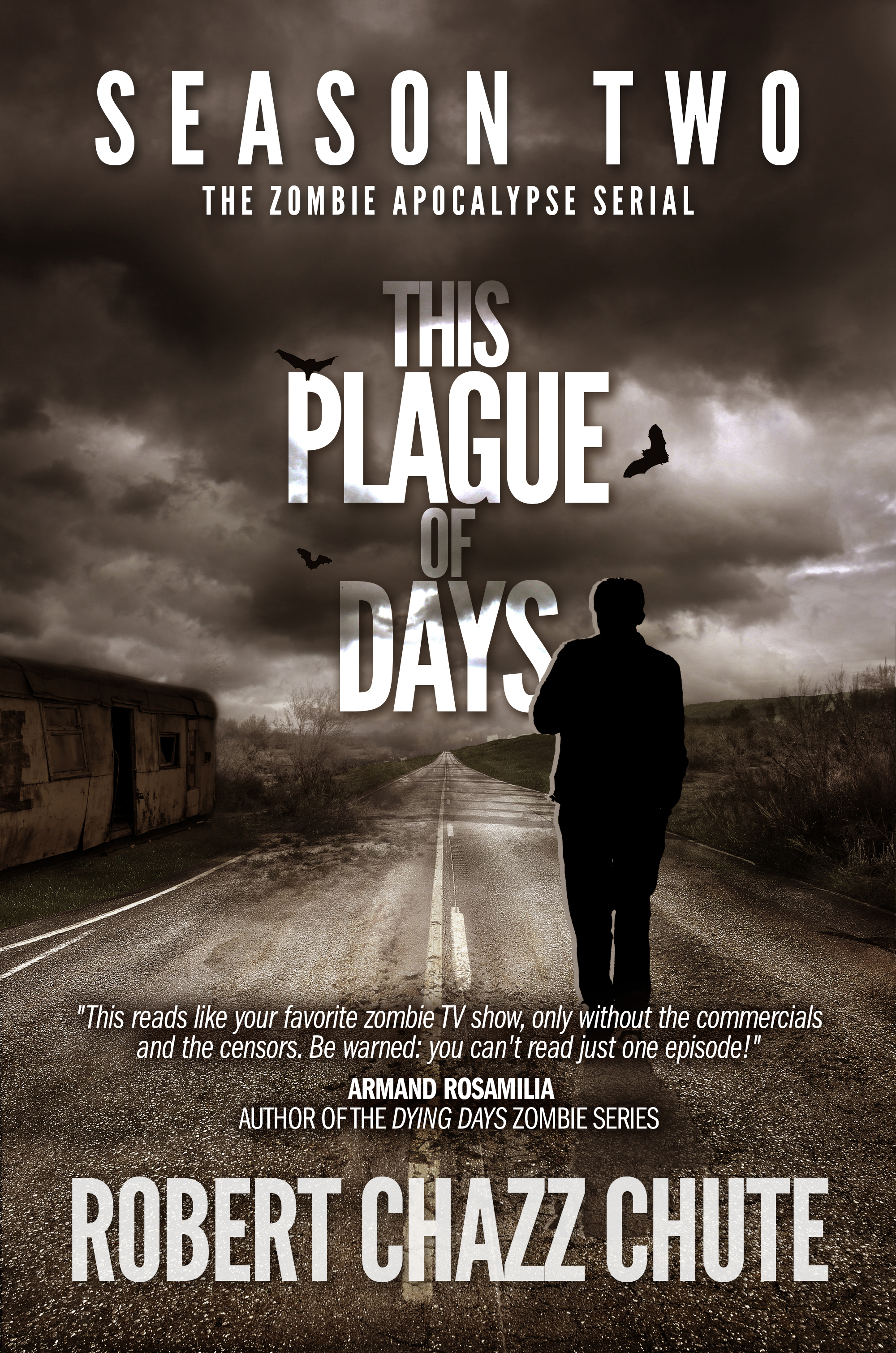
Tag Archives: This Plague of Days

This Plague of Days: An intro to serials and the big idea

Reports of autism cases per 1,000 children gre...

Reports of autism cases per 1,000 children grew dramatically in the US from 1996 to 2007. It is unknown how much, if any, growth came from changes in autism’s prevalence. (Photo credit: Wikipedia)

If you’ve never read a book as a serial, think of it like a television season broken into episodes. Just like TV, I throw hooks and leave characters hanging off cliffs until next week.

There are five episodes in Season One. You can purchase the weekly episodes at 99 cents each, or look under the couch cushions and find out what happens next immediately by buying TPOD Season One for just $3.99.

Gosh. Um. Getting the discount is the recommended course. Not in the couch? Try your winter coat pockets or the change in the car’s ashtray. Thanks!

Strap in, buckle up and say, “Pickle!” (You’ll find out.)

And watch out for the zombies. They’re coming for you after a long voyage and they are starving.

~ Robert Chazz Chute

June 2013

Related articles


Sneak Peek: This is not a poem

This is not a poem…exactly. It’s the table of contents to a coming episode of This Plague of Days from Season One.


Here we sit in Death’s Cafe
We are the zombie’s reluctant buffet
The deepest wounds are those unseen
Between what we were and where we’ve been
Be killed or kill in days like these
Pray for God’s mercy or the Red Queen’s disease
Say farewell to your comfortable home
Goodbye to tea, clotted cream and scones
The fruit of war, the wages of sin
You don’t yet know what it will take to win
Or even half of the trouble we’re in
Save your strength for the fight
Use your rage. Defy the night.

(Getting close to finalizing the cover art, hearing back from the last beta team members and getting this bird off the ground.)


Episode 4 Teasers: From today’s polish of This Plague of Days

Coming soon!

Coming soon!

Family matriarch Jacqueline Spencer on the existential abyss that is the plague:

How deep would Sutr reach down into the fabric of what had been and tear with unforgiving teeth? How resilient was that fabric? Was civilization just a thin sheen of varnish over shiny, black claws of primal aggression? She knew Theo thought so, but she hoped her husband was wrong.

On a scavenging trip to the mall, a little band of explorers from the Spencer family encounters a wall with notes and graffiti:

A little further on stood several memorials. “Olivia, you were a good wife,” read one. That was in white and, unlike the others, writ large to fill the height of the wall for several concrete panels. The tribute had been painted with a wide brush by a tall man.

Another simply read: Andrea. Why?

Here and there, fading pictures of missing loved ones dotted the wall and fluttered in the breeze. A phone number was listed below a picture of a stunning redheaded woman wearing cat’s eye sunglasses. Heather Pritch, 29, separated at hospital. Came back for you. Will wait at train station. Tara. 

The flyer, fixed to the wall with a scrap of twisted duct tape, looked like it would lose its tentative hold with the next breath of wind.

There were also a few with directions and warnings: 

Todd, Meet Us At Deb’s, Love Beth. 

Go around Chicago!

Detroit’s Burnt DOWN! 

Army’s taken over Tahoe. They shoot all who approach.

Another read: Michigan has militia! but it wasn’t clear if that was a warning or a hopeful sign that somewhere there was order.

A more informative message read: Refugee Camps at NIAGRA FALLS has gone X. Many dead. Stay home and indoors. God bless. 

Just before a gap in the wall ahead, a green winking ghoul admonished them with a pointing finger. ‘We want you!’ was scrawled over its grotesque head. Below a smeared wagging finger were the words: Not to Litter! Burn Your Evil Dead! It was signed, The Ungrateful Living.

At another spot, a column of numbers from one to 24 stood, each number exed out. The next number in the series jumped to 26. Beside the column were the words: Tally of Looters shot.


They versus We: From Slave to Immortal in One Manifesto

Photo on 12-12-05 at 4.33 PM

You have suspicions about the way the world works.

You wonder if you are watched. (You are.)

You suspect you are judged. (Oh, my, yes.)

But it isn’t God that’s watching. It is the Devil in each person’s busy little mind. It is the Dark Matter, that vast expanse amid all you think you know and what They tell you ought to be. We are connected to the Dark Matter by invisible strands that make us puppets in a sad collective.

They issue orders: Get a loan, stick to the plan, sign your life away, head down, pull the harness. Do not look at the stars. Do not hope.

The Puppeteer wants you to paint on a happy face and do Their bidding and make Them rich and never think you should do anything outside of your box. If you think “outside the box”, you’ll find you’re still in Their cage: the debts you can’t pay, the job you can’t leave, the cash you don’t have and even the unemployment you can’t break from. If you let them, They control the transmission: your thoughts.

The Matrix is real. You’re swimming in it now. It is cold and it does not care about you.

The cage is the limitation you put on yourself: Your little life is Their paradigm. Your tiny, unfulfilled dreams are Their victories.

We know how much you swear under your breath as you smile at church. We understand how scared you are. We share your fears. Your fears are legitimate

They won’t tell you that, but that is the way it is. The universe doesn’t care about you any more than you are aware of a tiny stone on a small moon in an unknown constellation in a galaxy beyond your comprehension.

There is a choice: Wake up.

You will have to care for yourself. You can break from They. Form your collective of We.

We are dust motes in a sunbeam, mostly invisible, here for an instant and gone forever. We defy mortality with Art. Art is the only taste of immortality we are allowed. Graves are forgotten. In a generation? Perhaps two? You linger in no one’s memory without Art. Art is evidence you once breathed and loved and sang and thought and were.

You want to dismiss these words, but you know who They are. Even in your loneliest moments, you know you are a slave.

What is Their name? The Devil has many names: 

Habit.

Tradition.

The Way It’s Done. 

What You Should Do.

Normal.

What’s Expected.

What We Want for You.

Established Best Practices.

What We Need.

Nationalism.

Being “realistic”.

The Greater Good.

They aren’t concerned with your good and They do not want you to ask questions.

They are the enemy because They want you to pretend you are less than you are. They want to douse your flame and keep you asleep. They want you to die as soon as you are born.

They praise control, security and rigidity.

They condemn us because we are creative and we strive free ourselves of Their expectations.

But We?

We are not They.

We want to meet our own expectations and learn to control our own minds and hearts and bodies.

We set our goals and we stand for no dictator and we don’t sit to take dictation. We don’t put up with dicks, either.

We are not slaves. We are artists with names and aspirations. We write and produce art and inspire more art. We consume art and live it. Each conversation, connection and kind touch can be Art. Artists light fires in others, as one candle fires another.

We become Art in each giving, caring, real moment.

We make and remake our lives until we break the bonds They knotted so tightly when They insisted we sit quietly in straight rows, never questioning the paradigm that only benefits Them.

In creativity, We are Free and We live beyond the grave.

Our sunbeam warms us longer.

Our dust mote dances in the light.

~ I don’t know why I wrote this tonight. It often seems the world is stacked against an artist’s success. Successes are so rare, but success comes in many forms. What if I reach you tonight with these words? I couldn’t risk not whispering a word of encouragement in your ear.

This Plague of Days will launch soon. Until my stories are out in the world, these are the days of dread, the pregnant pause just before a hopeful, tenuous birth.

To read my books and catch my podcasts, see the links at AllThatChazz.com.


This Plague of Days will appeal to word nerds and horror fans, too

English: A multi-volume Latin dictionary (Egid...

English: A multi-volume Latin dictionary (Egidio Forcellini: Totius Latinitatis Lexicon, 1858–87) in a table in the main reading room of the University Library of Graz. Picture taken and uploaded on 15 Dec 2005 by Dr. Marcus Gossler. Español: Diccionario de latín (Photo credit: Wikipedia)

I’m getting some nice feedback on the advanced reading copies of This Plague of Days. Expect lots of cliffhangers to keep the pages turning.

Excerpt

Jaimie awoke to yelling downstairs. The lamp on the nightstand still shone and the Latin dictionary lay open by his head. The last phrase he had read was an interesting one: ubi solitudenum faciunt pacem appellant. They create desolation and call it peace. To the boy, the words tasted soft and were as pleasing to his eye as they were black and dangerous.

and this…

Jaimie looked up the word quarantine. He thought the word beautiful. The q tasted sugary and uaran struck Jaimie as the essence of a firm avocado. Best of all, the word ended with –tine, the sound of a little silver bell.

Yes, this serial has some odd angles for a zombie apocalypse. Buckle up!


New Sample Snippet: This Plague of Days isn’t all grim

PlagueAnna turned up the radio, concentrating on the thin signal. 

Cat McCloud, the lone DJ, was a fellow with a booming voice that slipped into gravel when he was being serious. He wasn’t serious often. “You want a weather report, look out the window and there’s your goddamn weather report,” he said. “Excuse my Balinese but the FCC don’t run me no more. The Powers That Be always were killjoys, censoring us and suckin’ the good outta you like a bad night’s sleep.”

Cat reported where he’d been — all over the eastern United States. He said he’d ridden out Sutr X’s first wave in a campground in Delaware. “The lights are on in Delaware and there’s still plenty of food and gas around if you bother to look — at least there was three weeks ago. I guess what I got isn’t news ’cause it’s so old, but we all needed to slow down anyways, didn’t we? In honor of what was, let’s spin some more vinyl — that’s right, I said vinyl! Coming up, more Rush ’cause I love ’em and they play long songs so ol’ Cat can step out my door and take a tinkle without worrying about the cops spoiling the joy of peeing out my front door no more!” 

“Later on you can lick your chops over some Foghat, Grand Funk Railroad and a Pink Floyd marathon. Far as I know, I got the last radio station in these former United States of Dystopia so I’ll play what I like, long as I’m kickin’ and poppin’ garlic pills and smokin’ the magical herb of happiness! Commercial-free, brothers and sisters! Back atcha after side one of Rush’s album Caress of Steel from a good year, 1975, back when we still thought the apocalypse was coming in the form of nuclear annihilation. Right on!”

Anna looked stricken. “The only radio station we’ve heard in weeks and the DJ’s the last hippie on earth. And he’s armed with a time machine.”

And there are fun pop culture references to make grim situations a little lighter:

The Spencers were joined by more cars on the highway, usually travelling in the same direction. Past the juggernaut of Montreal, they had noticed a trickle of fellow travellers in vehicles. Farther east, the trickles became streams. Traffic moved well and, wary of accidents for which no help would come, no drivers were reckless and, perhaps to conserve fuel, none sped, either. Most drivers made no eye contact so no contact could be invited nor implied. 

“This is somewhat more civil than The Road Warrior led me to expect,” Anna said. 

The cars and trucks were always packed full. Once they spotted a tiny car with a piano strapped to its roof. Back windows were often filled with bedding, perhaps to block anyone’s view of how many people might be travelling in the car.  

They followed a farm truck with a group of young women huddled against the wind in the open back. 

“Saviors or slavers?” Anna asked.

Jack shrugged. “I’m uncomfortable with that question. But it makes me think we have to somehow get hold of guns.”

“Papa Spence has a deer rifle and shotguns for pheasant season on the farm,” Theo said.

“Let’s hope we won’t need a gun before we get to Maine.” Anna watched the women in the truck, searching for some sign of a plea in their forlorn faces. Before long, the truck turned onto a dirt road and dust clouded their last look. 

Anna gritted her teeth. “If this is going to turn into a misogynist Game of Thrones world, then I’ll have to personally go all Katniss and turn it into a Hunger Games planet.”


NSFW Horror: A grisly excerpt from This Plague of Days

Turkey Vulture

Turkey Vulture (Photo credit: Wikipedia)

The Spencers walked into the yellowing sun. Jack hoped the weak heat would dry them and the sunlight might somehow purify them. Though Jack’s breath was soon as heavy as her backpack — she cursed herself for not taking better care of her body — she found fatigue was easier to dismiss in the presence of horror. She wanted to get beyond the block of cars. They had to get beyond this dam of metal and flesh, find a vehicle, and continue to Maine as quickly as possible.

What if Lieutenant Carron found a way to get to the Corners faster?  Jack saw herself open the door to the kitchen at the farm, relieved to have finally found a haven. What if the man who had pointed a rifle at her face, at her daughter’s face, waited there, a shotgun now aimed at her midsection? He was so angry, there was no reasoning with a monster. Carron would warm himself by the wood stove. Papa Spence would be dead on the floor at his feet. She wouldn’t have time to plead before he pulled the trigger and cut her in two.

On the road beside them, two seagulls squabbled over ribbons and scraps, staging a tug-of-war over white meat. Despite her promise to avert her eyes, Anna did look. The face was gone. The torn scalp stretched out in the birds’ beaks, a long tangled splay of string across black and red pavement. The long hair suggested to Anna that the thing lying before her, exposed and obscene, had been a woman. A vulture went about its work, its head in the corpse’s ruined belly, ignored the screeching gulls. Intent on its meal, the bird raised its ugly bald head, ratcheting back and forth and up and down, to tear and to swallow. 

Anna knew she should turn away but found she could not. The dead woman’s abdomen had bloated and burst in a riotous stench of busy maggots. The bird’s head and neck disappeared into the gore to its hunched shoulders and came up again to tilt its head back to feast again, forcing a large, pink chunk into its gullet.

The girl bent to throw up. The moment she was empty, Anna turned to walk on. “Mom,” she said. “If we ever see Carron again, I’ll kill him right away. I won’t hesitate if I can find a way to do it. He’s a vulture and he wants to turn us into that.”

Her mother trudged forward and said nothing for a long time. Finally, “If you can do it, it won’t be wrong.”

~ I’ve been ill, so I’m playing catch up with revisions. However, things progress. For a more positive life outlook, have you subscribed at www.DecisionToChange.com yet? Or bought a book? Mere suggestions. No! Strong suggestions! If you can do it, it won’t be wrong.


From the revision well: Chapter 2 of This Plague of Days

The moon lit the boy’s face as he peered over the fence into the next yard. Jaimie Spencer watched the couple on the lawn chair. The chair’s squeak had drawn him closer, curious. He wasn’t allowed in the neighbor’s yard, but moon shadows amid thick hedge leaves concealed him. A  woman he’d never before seen sat in the older man’s lap. The man, Mr. Sotherby, lay still beneath her. Jaimie could not see the man’s  face, but there was something grim about him, as if the couple were reluctant joggers in a cold wind. 

A cool hand slipped to the back of the boy’s neck. Without looking, Jaimie knew it was his sister, Anna. “Ears,” she whispered, “You’re being creepy again.”

The woman froze and turned her head. The couple whispered to each other, too. Sotherby’s voice was insistent. Hers was afraid. 

Anna guided her little brother away from the hedge line. Anna did not speak again until she and Jaimie stood by their own back door. “Mr. Sotherby has brought home another one of his flight attendant friends. You shouldn’t spy on them. It’s wrong.”

Jaimie did not look at Anna directly. He never met her eyes and he rarely spoke. Her brother cocked his head slightly to one side. That questioning gesture was a rare bit of Jaimie’s body language that few outside the family could read easily. Anna told Jamie that when he cocked his head that way, he looked like Fetcher, the cocker spaniel they’d once had. In every picture they owned of that pet, the spaniel’s head was tipped slightly sideways, perplexed by the camera. Jaimie thought the entire breed must cock their heads slightly sideways, hence their name. The boy abhorred instances of imprecision and illogic in language, and so he was frequently disappointed.

This Plague of Days III“Mr. Sotherby brings home his friends. Remember Mr. Sotherby’s a pilot? He gives rides to lots of people, Ears. He was just giving her a ride. That woman you saw thought she was part of a couple, but they were really just coupling.”

Couple: a noun and a verb. Jaimie had read these words in his dictionary. Overlaps of meanings and terms irritated. He wondered if his sister was trying to bother him. She often called him Ears when she was angry with him, though sometimes she called him that when she hugged him, too. More confusion and imprecision. 

“Dad says it’s a terrible thing what’s happened to flight attendants,” Anna said. “He says when they were called stewardesses, they were cuter. Now the older ones have a waxy look.”

Jaimie wondered how the change in the name of their occupation could have changed the way they looked. He’d heard there were magic words. “Flight attendant” must have powerful, and dangerous, magical properties.

Anna pulled her little brother into the house. “Let’s keep this between you and me,” Anna said and then burst out in a giggle. “Mom would worry you’re getting corrupted. I won’t say anything and I know you won’t.”

Jaimie followed Anna up the back stairs into the kitchen. She pulled out a box of cereal and poured a bowl for herself and one for her brother. He never asked to eat but was usually cooperative if a bowl and spoon was placed in front of him. 

He couldn’t stop thinking about Mr. Sotherby and the woman. Jaimie liked to watch colorful patterns that flowed around people. He had seen the colors around living things all his life. He assumed everyone saw them. The boy had seen something pass between Mr. Sotherby and the flight attendant he had never before seen. It was disturbing because it muddied their colors and made them less vibrant.

Jaimie stood at the sink and gazed out of the kitchen window as he ate.  The moon hung so low and full, the tip of a distant church spire reached, its tip stretching to split Clavius, a large crater toward the base of the moon’s face. The boy’s mind wandered over the words spire and aspire. Surely, the terms shared the same arrogant word root. But the spire would always be bound to the earth, many miles short of aspiration’s heights. The gap between hope and doomed reality turned the boy’s mind back to the naked woman in the next yard.

Small black spots had hovered between the pair like greasy flies. The black smear spoiled the usual pleasing weave of colors. There had been many of them, like a cloud of feeding insects, around the woman. They spread over Mr. Sotherby, too, reaching for him. Jaimie didn’t know what the black spots were, but he sensed a yearning and purpose in their movement. They aspired to reach Mr. Sotherby and overtake him. He sensed the black cloud’s aspirations would be fulfilled. 

That was Jaimie Spencer’s first glimpse of the Sutr Virus at its deadly work. He was sixteen. He might have mentioned it to someone, but Jaimie Spencer was a selective mute. 

“A very selective mute,” his father, Theo Spencer, called him. “Jaimie has something we all lack: A super power. My son can shut up until he has something to say.”

But Jaimie’s ability to communicate well still waited on a distant time horizon then. Billions would have to expire — and one death would have to transpire — before Jaimie found his voice.  

~ This Plague of Days will be ready to launch in roughly a month. In the meantime, please check out all the links to books by Robert Chazz Chute at AllThatChazz.com.


What do we really need to survive disaster?

I just ran across a great website called Survival Cache!

Follow this link to their 100 suggestions about stuff you need and what disappears first in a disaster. 

It’s a thorough and fascinating list. In the first four episodes of This Plague of Days (to be released soon!) the Spencer family is under siege from the world flu pandemic.

Until the Sutr Virus hits here, you could read these books by Robert Chazz Chute. Just sayin'.

Until the Sutr Virus hits here, you could read these books by Robert Chazz Chute. Just sayin’.

They stock up on what they can as prices soar and canned goods are flying off the shelves. 

I’ve seen that happen personally on a small scale. During the SARS crisis, you couldn’t buy a bottle of hand sanitizer for any price where I live. The supplies were all gone in the worry and panic over SARS.

Then, at the end of the first season of This Plague of Days, the crisis shifts. Over the next four episodes, The Spencer family loses a lot, including much of their cache of emergency supplies. Once they’re on the run, they can’t take everything they need. Then they can’t carry everything they need. When traffic jams block all escape routes, survivors have to get innovative.

So we need to think carefully about our go-bags.*

What do we absolutely need and what luxury will feel like it weighs a ton by the fifth mile of our hike to safety? Individual capacities will vary. Maybe you’re a Marine who can huck a heavy ruck 25 miles a day, but what weight can your ten-year-old daughter carry? Is the weight in the harness rig on your dog balanced? Can grandpa walk out of the flood zone unassisted or should he stay behind and hope for a helicopter? Do you have alternate escape routes and fallback positions? What’s the backup plan behind the backup plan behind the backup plan? 

What’s in your backpack?

When many people think of prepping, they picture a fortress, panic rooms, a bunker, a defensible Wal-mart or a castle with a moat. They picture infinite supplies and relative comfort. But what if the hurricane takes away your supplies and screws up your plans for holing up and waiting out the flood, fire and armies of crazed zombies?

To be zombie-ready, we have prepare to be mobile, too. Get out your clipboards, pack and repack and weigh. Start crossing stuff off your awesome list. Figure out what gets packed in the basement, the family van and what you can carry on sore, aching shoulders to safety.

*More on go-bags in a coming guest post by friend and fellow author Jordanna East.


Extended, special sneak peek: How This Plague of Days begins

“Basically,” Dr. Julian Sutr said, “Viruses are zombies. They are neither classifiable as living nor dead. When given the opportunity, they reproduce using a host. Their molecules form complex

Until the Sutr Virus hits here, you could read these books by Robert Chazz Chute. Just sayin'.

Until the Sutr Virus hits here, you could read these books by Robert Chazz Chute. Just sayin’.

structures but they need hosts to reproduce. Nucleic acids, proteins — ”

The Skype connection froze for a moment and then the doctor understood he was being interrupted. “—preciate your summary, doctor.” Two men in uniform and one woman in a suit, each with their own screen, regarded him with impatience.

“The virus has grown more…opportunistic. What fooled us early on was the varied rate of infection and lethality. I suspect individual variance in liver enzymes accounts — ”

The woman cleared her throat and Sutr lost his place in the notes he’d prepared for this meeting. She sighed as he fumbled with his iPad. He had too many notes and not enough time. The woman sighed and tapped a stylus on her desk. “I’m meeting with him soon, doctor. I need the bullet, please. What do I tell him?”

Sutr removed his glasses and closed his eyes. This was too important to stammer and stutter through. Finding the correct words had never mattered more. He took a deep breath but kept his eyes closed and pretended he was speaking intimately with his beloved Manisha. His wife’s name meant “wisdom” and she shared her name with the goddess of the mind. He needed her and her namesake now. “My team and I…” He took another deep breath. “The virus has jumped.”

One of the men in uniform, an admiral in white, spoke, which automatically muted Dr. Sutr’s microphone. “First it was bats, then birds, then migratory birds, then pigs and cows. What animal do we warn the WHO about now? What animal do the Chinese have to slaughter next to keep the cap on this thing? A vaccine won’t help billions of Chinese peasants if they starve to death first.”

“I’m very aware of the stakes, sir, but the virus has jumped to humans. I asked my contact at Google to watch the key words. The epidemiological mapping of the spread is already lighting up in Japan, Malaysia, Chechnya and I already have confirmation it’s in parts of the Middle East, I’m afraid.”

“What’s your next step, doctor?” the woman asked.

Sutr opened his eyes. “I’ve sent my team home. They should be with their families now. As should we all.”

The man in the green uniform, a four-star general, leaned closer to his camera, filling Sutr’s screen. “This is no time to give up the fight, doctor. We’ve got a world to save from your…what did you call it? Zombie virus?”

“Pardon me, general. It was a clumsy metaphor. My point was that viruses are dead and I can’t kill dead things. I’m afraid we lost containment. I suspect we must have lost control sometime in the last two to three weeks. Perhaps less. Maybe more. There are too many variables. This virus is a tricky one. Something new.”

The general paled. “Are you saying this disease was engineered?”

For the first time, Sutr showed irritation toward his inquisitors. “I don’t know! I told you, there are too many variables. The loss of containment could have been sabotage or someone on my team made a mistake. Maybe they were too afraid to admit their mistake. It’s possible I made a mistake and I did not recognize it as such! I’ve identified the virus signature, but the work will have to be taken up by someone else. In my opinion, we need a miracle. As a virologist who has worked with Ebola, my faith in miracles is absent. Nature doesn’t know mercy or luck. That hope was beaten out of me in Africa.”

The admiral cut in. “Look, you’re already headed for the Nobel by identifying the virus. There’s time. We have to hope — ” but the woman in the suit held up a hand and he fell silent.

“We do appreciate the complexity of the challenge before us, Dr. Sutr. That’s why we need you. You’re the best and you’re farther along in the research than any of the other labs.” The woman looked conciliatory now and her voice took on a new, soothing note. “We’re very anxious to have you continue.”

Dr. Sutr stiffened. “I’ve already composed and sent an email for the lab network. You’ll have the entire data dump and I’ve made extra notes so your teams won’t waste time with what hasn’t worked. Dan, at CDC will coordinate my latest data to the other nodes. Good luck with it.”

The woman’s eyes narrowed. “You were vague about the virus gaining traction in ‘parts of the Middle East’. Have you line of sight confirmation, doctor?”

“Yes. I’ve seen the virus’s work in person. Here in Dubai, in my own house. Tarun, my baby boy died last night. My wife, Manisha, followed him to see where he went early this morning.”

“We’re so sorry for your loss, Julian,” the woman said. “Are you infected?”

“I have no doubt I will die.”

“How long have you got, son?” the Admiral said. “You’ve said the infection gradient and lethality is so variable…you could keep working. We could still defeat this thing.”

Julian Sutr’s voice came firm and steady. “General, Admiral…Madam Secretary. It’s entirely possible that I brought it home to them. My wife and child are dead by the virus that bears my name. I should have been an obstetrician like my mother. She brought life into the world…” A tear slipped down the doctor’s cheek. “You people ask me what you should tell him. Go to your briefing. Tell him that, in all likelihood, he is the last President of the United States.”

Dr. Julian Sutr picked up the Sig Sauer P220 from his desk, placed the muzzle under his chin and pulled the trigger.